
Chapter 3: the gold rush, the aloe trade, the refinery and World War II
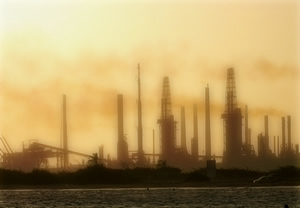 In the 19th and 20th centuries Aruba changed from a quiet ranch island into a place of gold mines, aloe fields and one of the largest oil refineries in the world. This chapter tells that story.
The gold rush
As early as 1725 the West India Company had the island searched for minerals, but little was found. The real gold rush started in June 1824, when a 12-year-old shepherd boy, Willem Rasmijn, found a gold nugget in the dry riverbed of Rooi Fluit.
Smelting works were built to process the ore: Bushiribana on the north coast in 1872 and Balashi near Spanish Lagoon in 1899. During World War I spare parts could no longer be obtained, and in 1916 gold mining came to an end.
Between about 1879 and 1914 phosphate was also mined at Seroe Colorado, in the far south-east of the island.
Aloe
Aloe was introduced around 1840 and grew perfectly in the dry climate. At its peak up to two-thirds of the island was covered with aloe fields, and Aruba was the largest exporter of aloe in the world. The company Aruba Aloe, founded in 1890, still exists today.
Oil and the Lago refinery
In 1924 Lago Oil & Transport, part of Standard Oil, started a transshipment terminal for Venezuelan crude oil in San Nicolas. From 1929 it refined oil there, and the Lago refinery grew into one of the largest refineries in the world. Shell also operated the smaller Eagle refinery near Oranjestad from 1928 to 1953. The refineries brought work and prosperity, and thousands of workers from other Caribbean islands and beyond moved to Aruba.
World War II
Because of its refineries, Aruba was of strategic importance to the Allies. On 16 February 1942 the German submarine U-156 attacked tankers off San Nicolas and tried to shell the refinery, but the deck gun exploded. The Aruban Boy Ecury joined the Dutch resistance in Europe and was executed in 1944; he is honoured as a national hero.
Closure and a new chapter
In 1985 Exxon closed the Lago refinery, which caused a deep economic crisis. The refinery reopened several times under other owners, including Coastal from 1991 and Valero from 2004, but has not been in operation since 2012. A plan to restart it with CITGO was cancelled in 2020, and in 2025 Aruba and the Netherlands decided to dismantle the site for good. By then tourism had long become the main source of income.
The history of Aruba in four chapters
- Chapter 1: Early Inhabitants and the Spanish
- Chapter 2: Dutch and English Rule
- Chapter 4: Status Aparte and Autonomy
See for yourself
- Gold Mill Ruins – Bushiribana and Balashi
- Aruba Aloe Factory & Museum
- The Lago refinery in San Nicolas
- Boy Ecury – Aruban resistance hero
Good to know
- Gold found: June 1824
- End of gold mining: 1916
- Aloe introduced: around 1840
- Lago refinery: from 1929, closed in 1985
Historical sources do not always agree on exact dates and numbers; this overview follows the most widely supported accounts.
See also: the history of Aruba.
Last updated: September 2026.