
From the Caquetío to Status Aparte
 Aruba has a rich history, from its first Indigenous inhabitants to the Spanish and Dutch colonial periods, a gold rush, the aloe trade and the oil refinery that shaped the 20th century.
Timeline
- Around 2500 BC: the first fishers and hunter-gatherers live on the island.
- Around 900–1000 AD: the Caquetío, an Arawak people from Venezuela, settle on Aruba and leave rock paintings in caves such as Fontein.
- 1499: the Spanish explorer Alonso de Ojeda reaches Aruba. Spain calls the ABC islands "islas inútiles" (useless islands) because no gold is found.
- 1636: the Dutch West India Company takes Aruba from Spain.
- 1799–1802 and 1805–1816: the British occupy the island during the Napoleonic Wars.
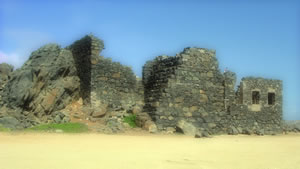
- 1824: gold is discovered. Gold mills are built at Bushiribana (1872) and Balashi (1899); mining ends in 1916.
- Around 1840: aloe is introduced. In 1890 Aruba Aloe is founded and by 1920 much of the island is covered in aloe fields.
- 1929: the Lago refinery in San Nicolas starts refining and grows into one of the largest refineries in the world.
- 18 March 1976: Aruba adopts its own flag and national anthem.
- 1985: the Lago refinery closes; tourism becomes the main source of income.
- 1 January 1986: Aruba becomes an autonomous country within the Kingdom of the Netherlands (Status Aparte).
- 2025: Aruba and the Netherlands decide to dismantle the former refinery and redevelop the site.
Read more
- Early inhabitants and the Spanish
- Dutch and English rule
- Gold, aloe and oil
- Status Aparte and autonomy
- Famous Arubans
- Boy Ecury, Aruban resistance hero
- The refinery in San Nicolas
- Culture of Aruba
Good to know
- National Anthem and Flag Day: 18 March
- Betico Croes Day: 25 January
Information on this page can change over time, so check official sources for the latest details.
See also: more about Aruba.
Last updated: September 2026.